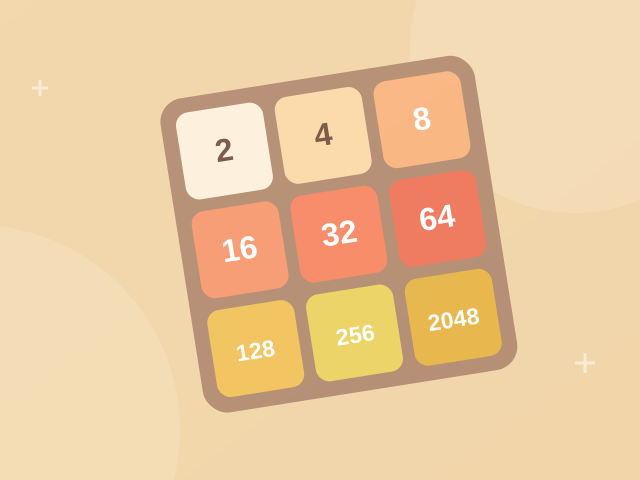
2048
Number puzzles
MobileNumber puzzles use values as the pieces of a spatial problem. Read the merge rule before playing: addition, matching and doubling are different mechanics, and a visual resemblance does not make two games equivalent.
2048 combines equal neighboring tiles into a doubled value. A move shifts the whole board and can add a new tile, so empty space is part of the strategy. Its detailed game page explains merge order, scoring and local saves.
Slide, combine and think one move ahead. Merge equal numbers on a four-by-four board until you reach the 2048 tile.
Use arrow keys or swipe to slide the tiles. Equal tiles merge when they meet.
Puzzle games reward reading a situation and making a deliberate change. Some ask you to merge numbers, others to recognize colors or plan a route. Start with a game whose controls and pace match the kind of challenge you want.
A matching game can be about neighboring swaps or arranging incoming pieces. The correct move depends on the specific board and on whether new pieces keep arriving while you think.
Read what a number means before treating two boards as the same puzzle. Some games use numbers as labels; others ask you to add, match or double values. The number puzzle available here is 2048, where equal tiles merge into a doubled value when a whole-board move brings them together. That is different from choosing two arbitrary cells and adding them. There is no reason to click repeatedly on a single numbered tile: the move applies to the board. If you want another kind of comparison, look at matching games, where color and position matter under different rules. Choose by the mechanic you enjoy rather than assuming every numbered grid follows 2048 rules.
These are related goals in 2048 but they measure different things. A merge adds the value of the resulting tile to the score. The highest tile shows the largest value currently on the board. A run with several small merges can increase the score while leaving the largest tile unchanged. When you compare two attempts, decide whether you are practising space management, building a particular tile or chasing a score. Keeping that goal clear makes a failed move easier to learn from. The 2048 guide includes a one-row exercise that shows points gained separately from the row after the move. The exercise is a rules demonstration rather than a saved full-game result.
Pick a board situation and explain the next move before making it. Ask which tiles will move, which equal neighbors will meet and where space will remain. In 2048, a tile produced by a merge cannot merge again in the same move, and a successful move adds a new tile in the full game. Those details make an apparently simple row behave differently from repeated addition. Use the guide's practice rows to check your prediction, then try a comparable situation in the real board. Review the decision that reduced your available space rather than blaming only the final move. This helps you learn a rule that transfers between runs without promising a fixed solution to randomly appearing tiles.